INDIVIDUAL MEDICATION PROFILES

Individual medication profiles, explained without shortcuts.

One medication at a time, in depth: how it works, what the first weeks can feel like, the side effects people actually ask about, and the questions worth bringing to a prescriber. For patterns across a whole family of medicines, see the psychiatric medication classes.

These profiles describe one medication at a time, not a prediction for one person. Benefits, side effects, interactions, and tapering needs vary by medication, dose, health history, and other treatments. Never start, stop, or change a psychiatric medication without the prescribing clinician.

EVIDENCE REVIEW
SEPTEMBER 24, 2026

Profiles

PROFILE 01Sertraline Sertraline (Zoloft), an SSRI and one of the most widely prescribed antidepressants in the United States: how it works, the first month week by week, and the side effects people actually ask about.Read the profile PROFILE 02Bupropion Bupropion (Wellbutrin), the antidepressant that works on dopamine and norepinephrine — not serotonin: how it works, its immediate-, sustained-, and extended-release forms, the seizure warning stated plainly, and the first weeks.Read the profile PROFILE 03Escitalopram Escitalopram (Lexapro), the most selective SSRI and a first-line treatment for generalized anxiety: how it works, the first weeks, the honest weight picture, and why needing it daily is not addiction.Read the profile PROFILE 04Venlafaxine Venlafaxine (Effexor XR), the SNRI known for brain zaps: how it works, the first weeks, blood pressure and sweating, and why its discontinuation syndrome is physiology, not addiction.Read the profile PROFILE 05Fluoxetine Fluoxetine (Prozac), the SSRI that changed the culture of treatment: how it works, the weeks-long half-life that forgives missed doses, the five-week MAOI washout, and the personality myth answered.Read the profile PROFILE 06Quetiapine Quetiapine (Seroquel), the antipsychotic millions take in small doses for sleep: how dose changes its job, the dose ladder, deep sleep and morning grogginess, and the metabolic costs that deserve a conversation.Read the profile PROFILE 07Trazodone Trazodone, the antidepressant that became America's sleeping pill: how a side effect became the main effect, the dose ladder from night doses to antidepressant doses, the morning hangover, and the rare-but-serious risks stated plainly.Read the profile PROFILE 08Gabapentin Gabapentin (Neurontin), the nerve pill now prescribed for anxiety across America: why the name misleads, what off-label really means, the fog and the unsteady step, and the dependence question stated plainly.Read the profile PROFILE 09Amphetamine Salts Amphetamine salts (Adderall), the most searched — and most misunderstood — stimulant: how it turns up the dopamine and norepinephrine the brain already makes, why the ADHD effect is steadiness rather than superpowers, and why the cheat-code myth gets it backwards.Read the profile PROFILE 10 Lithium The oldest mood medicine is a salt — element number three, found for psychiatry in 1949, still the standard for bipolar disorder, with blood tests as its seatbelt.

Psychiatric Medication Classes

Looking for the pattern across a whole family of medicines? The class guides describe what each family may change, what improvement can look like, and which risks deserve a real conversation.
Browse the psychiatric medication classes →

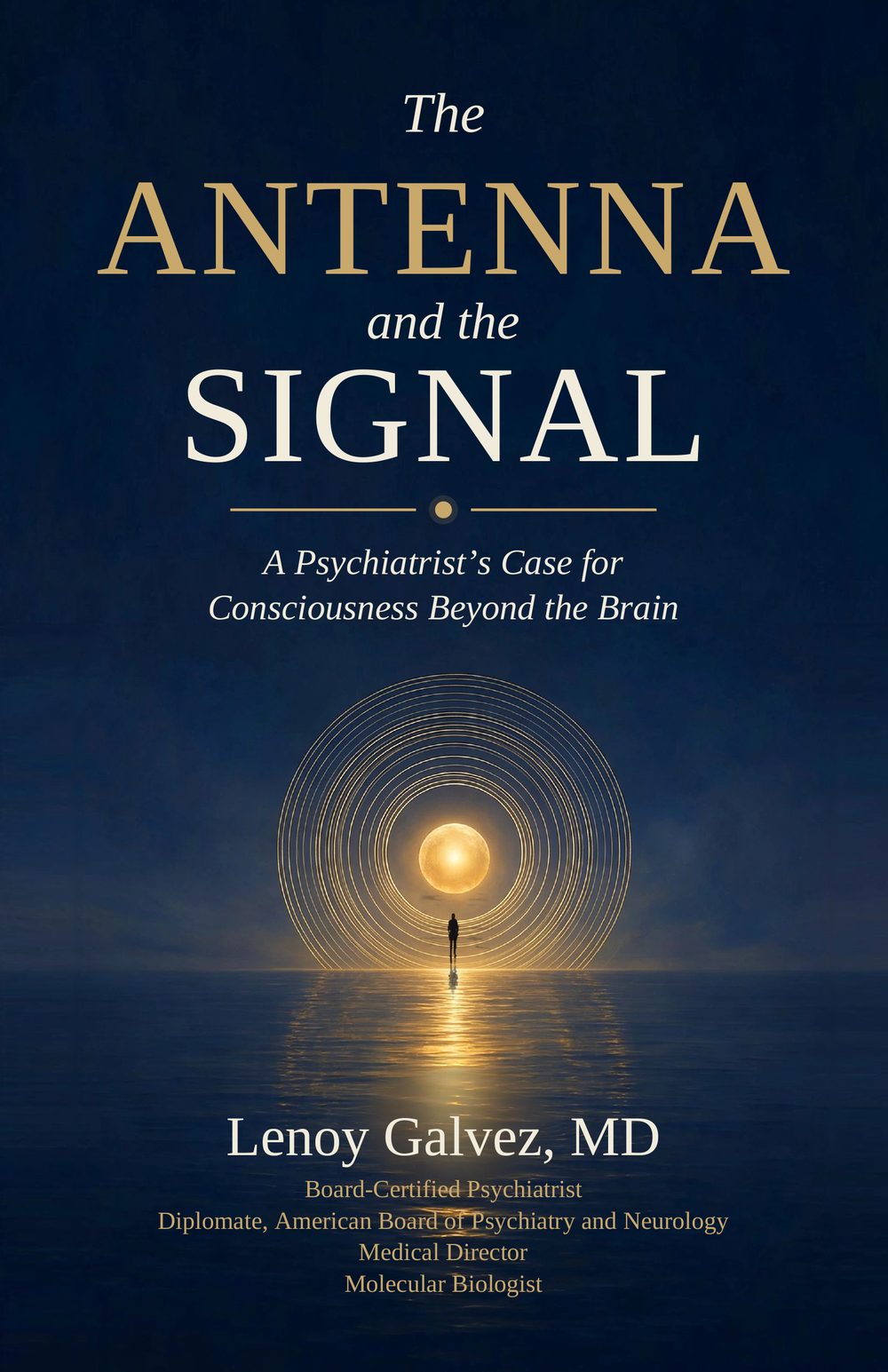
Front cover of The Antenna and the Signal: A Psychiatrist's Case for Consciousness Beyond the Brain by Lenoy Galvez, MD

THE BOOK

The Antenna and the Signal

What if the brain doesn't create consciousness — but receives it?

About the book