STORIES · STORY 05
The man with a seven-second memory
Consider Clive Wearing. In 1985, the British musician and conductor — then at the height of his career with the BBC — contracted herpes encephalitis, which destroyed his hippocampus. He was left with one of the most profound amnesias ever documented: unable to form new memories, his present lasts seven to thirty seconds before it vanishes.
These stories are cases with footnotes. Each one begins with the wonder — the person, the moment that does not fit — then slows down and separates what was actually documented from what is still argued about, and marks where interpretation — including this project's own lens — takes over from data. Every story here first appeared as a short video in this project's reels; these pages are the fuller telling, at reading pace.
EVIDENCE REVIEW
OCTOBER 27, 2026
Waking up, every twenty seconds
Wearing spends his days 'waking up' every twenty seconds or so, each time convinced he has just emerged from a coma. For years he filled diary pages with the same entries — the time, the words 'I am awake' — each new entry crossing out the last, because each time, the previous awakening had already been erased. By the storage model of the mind, the man himself should be largely erased with it: no past retained, no future built, just a narrowing loop of seconds.
And yet. He can still play the piano beautifully — the procedural memory intact, the music living somewhere the damage didn't reach. And his love for his wife Deborah, whom he married in 1983, two years before the illness, is undiminished: he greets her every time with overwhelming joy, as if after a lifetime apart — though she may have left the room only minutes earlier.
What survived the damage
The tape recorder is smashed; the music plays on. Whatever love is, and whatever music is, they are not stored where memories are stored — they are not files in the damaged archive. They look, for all the world, like signal: still broadcasting through a set that can no longer record. Clive Wearing's case does not prove the receiver model. But it draws its sharpest line: a brain can lose the archive almost completely, and the person — the loving, music-making person — can still, unmistakably, be home.
Watch the story
This story first appeared as a short video in this project's reels — find it among the project's Shorts. Watch the reels on YouTube
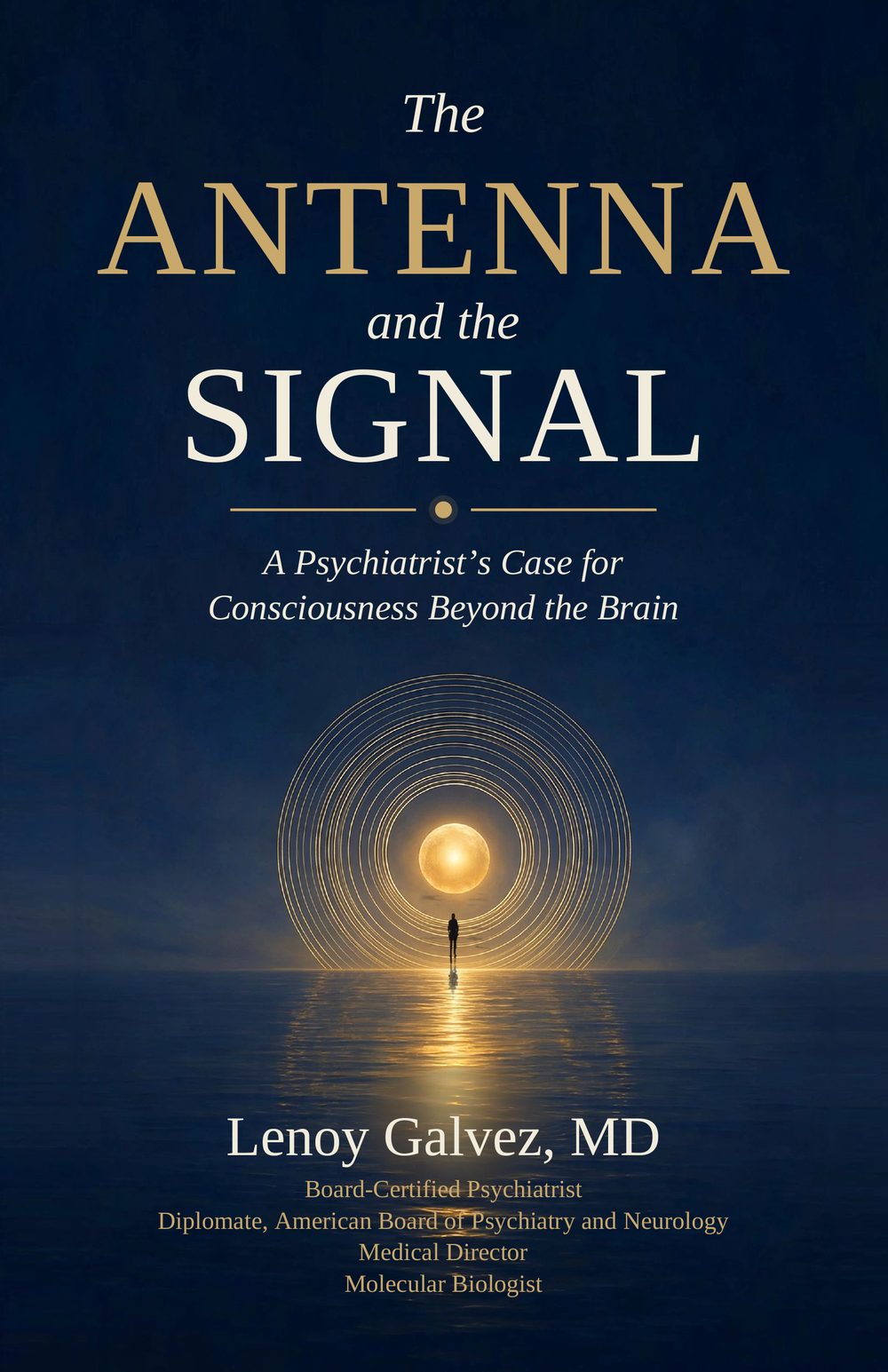
Stories like this one run through The Antenna and the Signal, this project's book. About the book