STORIES · STORY 04
She watched her own brain surgery
In 1991, Pam Reynolds underwent one of the most extreme operations in medicine: surgery for a giant brain aneurysm, performed under 'hypothermic standstill.' Her body was cooled drastically, her heart was stopped, and the blood was drained from her head. Her eyes were taped shut. Molded speakers in her ears played loud clicks, monitoring her brainstem. By every measure the team could take, the woman on that table was not in a position to see or hear anything.
These stories are cases with footnotes. Each one begins with the wonder — the person, the moment that does not fit — then slows down and separates what was actually documented from what is still argued about, and marks where interpretation — including this project's own lens — takes over from data. Every story here first appeared as a short video in this project's reels; these pages are the fuller telling, at reading pace.
EVIDENCE REVIEW
OCTOBER 27, 2026
What she reported
Afterward, Reynolds described the bone saw used to open her skull. She had never seen one; she said it looked like an electric toothbrush. She also repeated a conversation between the surgeons about her femoral vessels being too small. Both details checked out. Her account — of watching the operation from above, of perceptions later verified — became the most famous near-death case in the research literature, and it is told in full in this project's book.
The case is presented there, and here, with its honest caveat. Her perceptions occurred during the early phase of the operation, under deep anesthesia with the clicks playing — before the cardiac arrest and the flat EEG began. Skeptics argue that this leaves room for anesthesia awareness, however strained that explanation is by the taped eyes and the clicking earpieces.
What it does — and doesn't — prove
Pam Reynolds' story is not airtight proof of anything, and this project does not present it as such. It is presented as the type of case the antenna hypothesis predicts: structured, detailed, verifiable-seeming experience reported from a moment when the receiver was at its lowest ebb. A theory of consciousness should be able to look at this case directly — not file it under impossible and move on. This one keeps asking its question: if the brain was offline, who was watching?
Watch the story
This story first appeared as a short video in this project's reels. Watch the reel on YouTube
Go deeper: near-death experiences — what the research shows
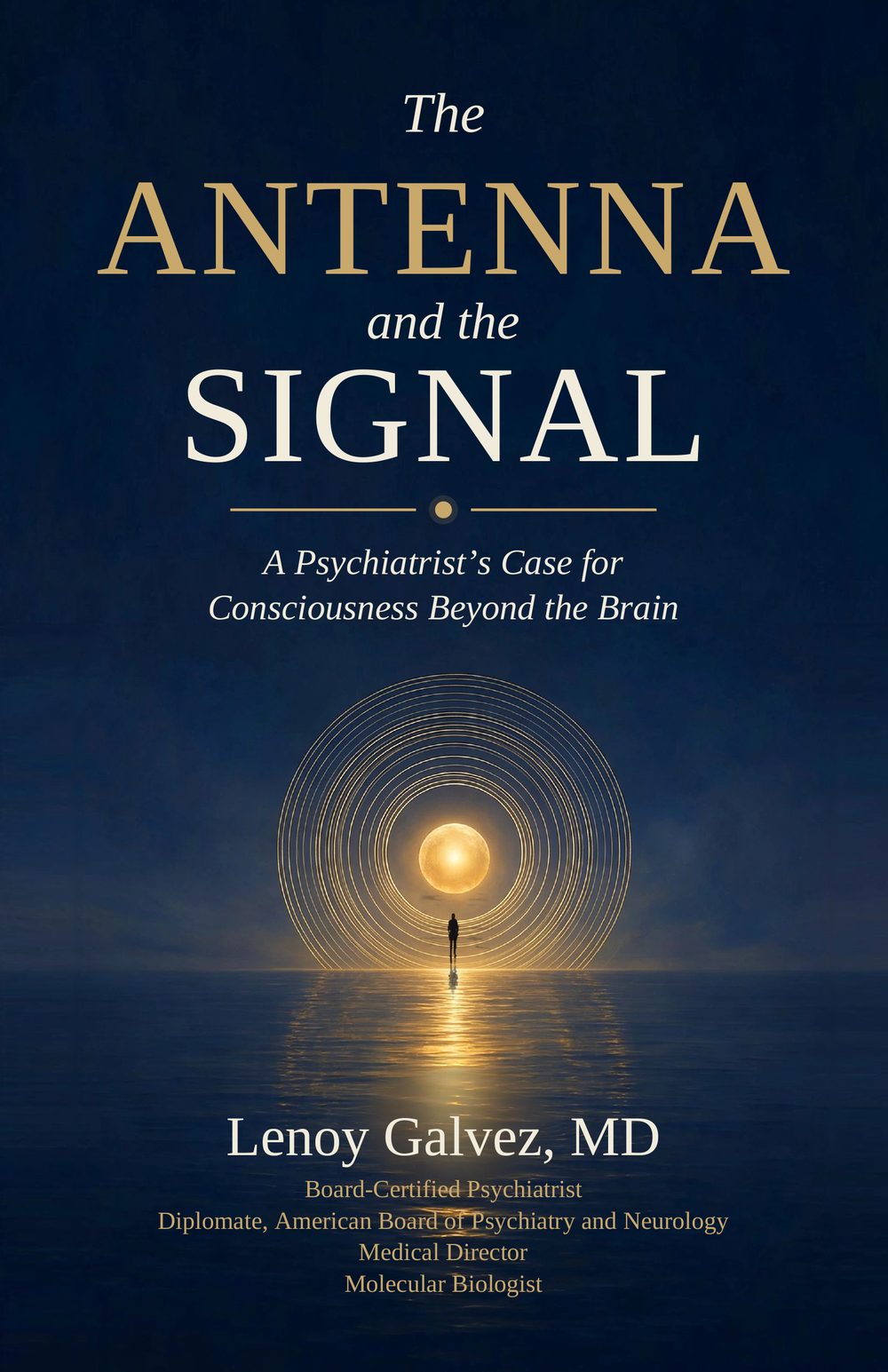
Stories like this one run through The Antenna and the Signal, this project's book. About the book