STORIES · STORY 01
The woman who can smell Parkinson's
She noticed it first on her husband. When Les was in his thirties, his scent changed — heavier, muskier, not quite his. Joy Milne thought nothing of it; people change. Twelve years later, Les was diagnosed with Parkinson's disease. And then Joy walked into a Parkinson's support group, looked around the room of strangers, and froze — because everyone in that room smelled exactly like Les.
These stories are cases with footnotes. Each one begins with the wonder — the person, the moment that does not fit — then slows down and separates what was actually documented from what is still argued about, and marks where interpretation — including this project's own lens — takes over from data. Every story here first appeared as a short video in this project's reels; these pages are the fuller telling, at reading pace.
EVIDENCE REVIEW
OCTOBER 27, 2026
The test she could not fail
Joy Milne has hyperosmia — a sense of smell far beyond the normal range. When scientists at the University of Edinburgh put that gift to a blind test, they gave her T-shirts worn by people with Parkinson's and by healthy volunteers. She identified every single patient. One shirt, from the healthy pile, she insisted smelled wrong. She hadn't missed: eight months later, that man was diagnosed with Parkinson's too. The disease had been there, written on his skin, before a single symptom showed.
Researchers at the University of Manchester, led by Perdita Barran, found what her nose already knew. Parkinson's changes the sebum — the natural oil of the skin — releasing chemical compounds that most noses never register. Working from her gift, they are now building a simple skin-swab test that could flag the disease years earlier than any current method.
The question it raises
Nothing mystical happened in that laboratory. A body was broadcasting information, and one unusually sensitive receiver picked it up. But that is exactly why the story belongs here. The standard picture treats the senses as finished instruments and the brain as the author of experience. Joy Milne's nose suggests a different arrangement: a world full of signals, and receivers that differ — person to person, sense to sense — in what they are tuned to catch. How much is the body, and the world, broadcasting that the rest of us simply filter out?
Watch the story
This story first appeared as a short video in this project's reels. Watch the reel on YouTube
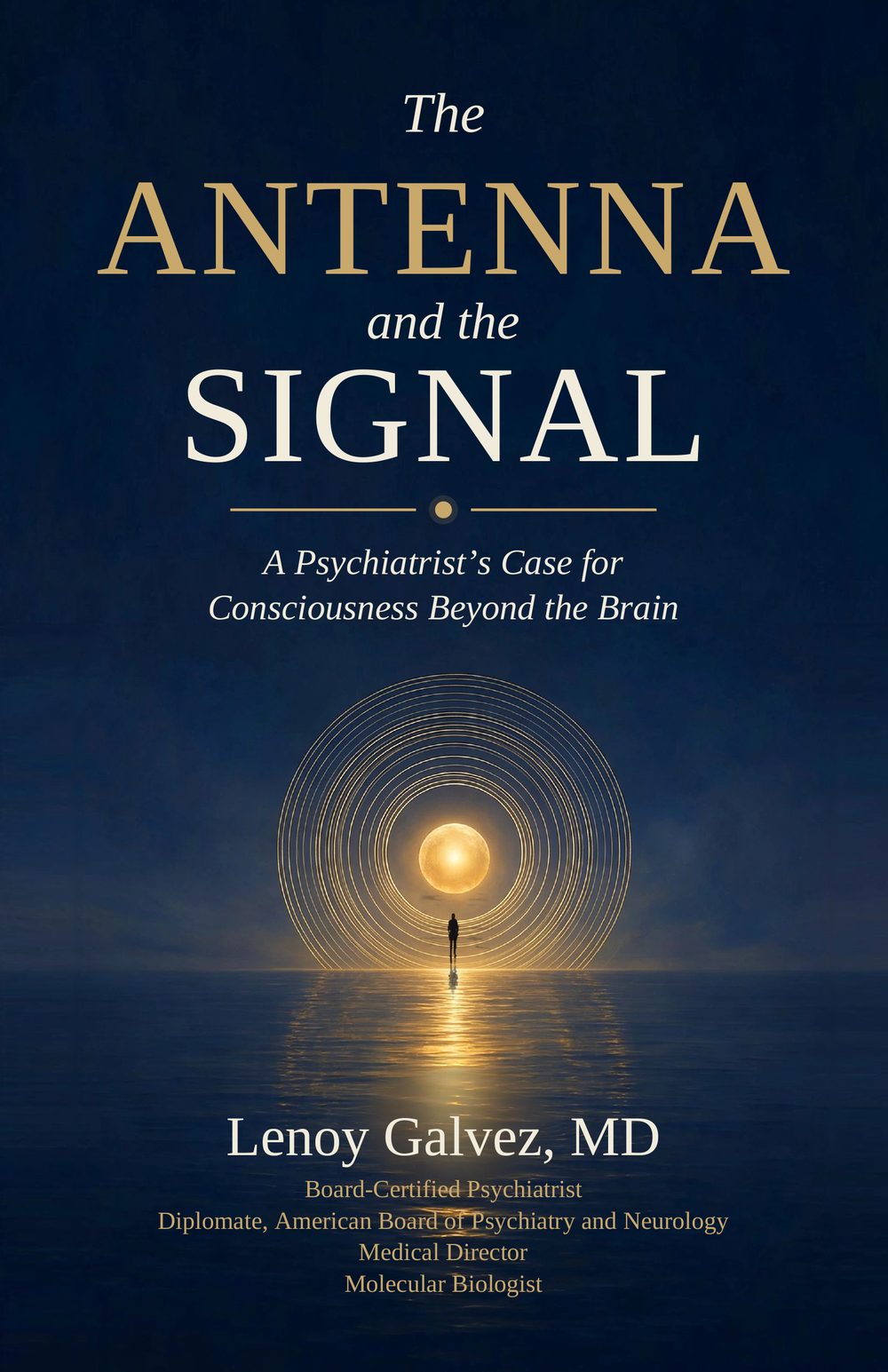
Stories like this one run through The Antenna and the Signal, this project's book. About the book